Learn what abutment clips are, their critical role in disc brake systems, and how they reduce noise, prevent rattle, and ensure even braking. Includes material guide and replacement tips from a trusted brake parts manufacturer.
When it comes to disc brake systems, most drivers and even some technicians tend to focus on the obvious components—brake pads, rotors, and calipers. However, tucked away within the caliper bracket lies a small but critically important component: the abutment clip. Despite its modest size, this unassuming metal clip plays an outsized role in brake performance, noise suppression, and overall vehicle safety.
In this guide, we'll explore what abutment clips are, why they matter, what materials they're made of, and how to determine when they need replacement.
What Are Brake Pad Abutment Clips?
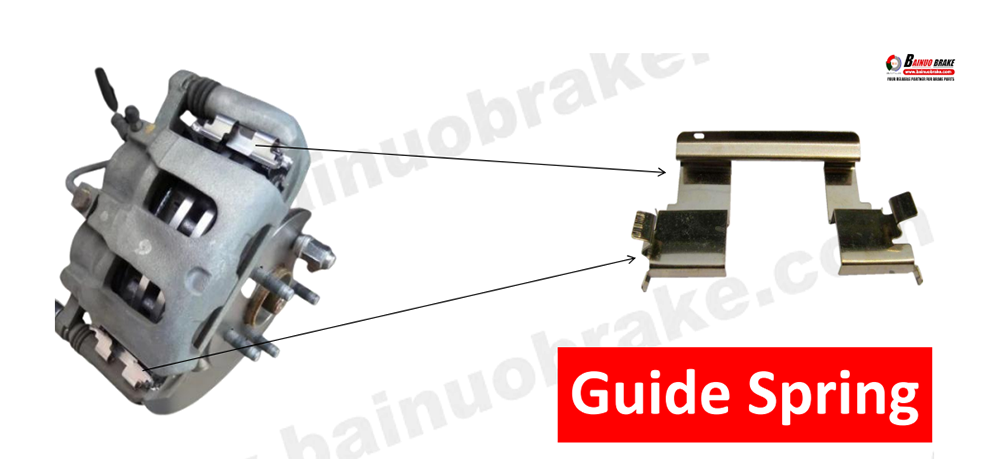
Abutment clips—also referred to as brake pad retaining clips, caliper slides, or pad abutment shims—are small metal brackets installed at the contact points between the brake pads and the caliper bracket. Typically, a pair of abutment clips is used per caliper, with one clip positioned at each end of the brake pad assembly.These clips serve as the interface where the brake pads "sit" within the caliper bracket lands. When properly installed, the abutment clips fit snugly into the bracket grooves, creating a stable foundation for the brake pads to rest upon.
Visually, abutment clips are usually U-shaped or L-shaped stamped metal pieces, often coated with anti-corrosion treatments or friction-reducing layers to enhance their longevity and performance.
The Primary Purpose of Abutment Clips in Disc Brake Systems
The functions of abutment clips extend far beyond simply holding pads in place. Here are their core purposes:
1. Maintaining Proper Pad Alignment
Abutment clips keep the brake pads centered and properly aligned within the caliper. When the brake pedal is pressed, hydraulic fluid from the master cylinder travels to the caliper, pushing the pistons outward. The pistons then press the brake pads against the spinning rotor. Without abutment clips to guide and constrain the pads, they could shift off-center, leading to uneven pad wear, reduced braking efficiency, and potentially dangerous braking imbalances.
2. Reducing Brake Noise and Vibration
One of the most appreciated benefits of well-designed abutment clips is noise suppression. As the brake pads make contact with the rotor, high-frequency vibrations can occur, resulting in the dreaded brake squeal. Abutment clips help dampen these vibrations by providing a stable mounting surface and introducing a slight tension that keeps the pads from rattling or chattering against the caliper bracket.
Many modern abutment clips come with integrated rubberized coatings or spring-steel tensioners specifically engineered to absorb vibration and minimize brake noise.
3. Enabling Smooth Pad Movement
Disc brakes require the pads to move freely—both toward the rotor during braking and away from it when the pedal is released. Abutment clips provide a low-friction sliding surface that allows this movement to occur smoothly. This smooth retraction is essential for reducing drag, improving fuel efficiency, and preventing premature pad wear.
4. Evenly Distributing Braking Force
By holding the pads in proper alignment, abutment clips help ensure that the braking force is distributed evenly across the face of the rotor. Uneven pressure can cause hot spots, rotor warping, and pulsation felt through the brake pedal. Properly functioning abutment clips contribute to consistent, predictable braking performance.
5. Preventing Brake Pad Rattle
Abutment clips apply a small amount of spring pressure against the brake pad ears, eliminating the clearance that allows pads to rattle when driving over rough roads or when the brakes are not engaged. This is particularly noticeable on older vehicles where the clips have become worn or missing.
Where Do Abutment Clips Fit Within the Complete Brake Hardware System?
Abutment clips are essential, but they do not work in isolation. They are part of a broader assembly known as the brake hardware kit, which typically includes:
Abutment clips (pad guides/slides)
Caliper guide pins (also called slide pins)
(pad retainers)
Shims (noise-reducing layers between the pad backing plate and piston)
Boots and bushings (protective covers for guide pins)
Each of these components plays a specific role, and their performance is interdependent. A worn guide pin can cause uneven pad wear just as easily as a missing abutment clip. For a detailed breakdown of every component in a complete brake hardware kit—including material specifications, installation torque values, and OEM-grade quality standards—be sure to read our Complete Guide to Brake Hardware Kits | Automotive Brake Parts Manufacturer & Supplier. This comprehensive resource covers everything from caliper bracket preparation to final torque checks, helping both professionals and DIY enthusiasts achieve factory-quality brake service.
What Materials Are Abutment Clips Made Of?
Abutment clips are manufactured from various materials, each offering distinct advantages depending on the application:
High-Strength Steel (Most Common)
The vast majority of abutment clips are stamped from high-strength spring steel. This material offers an excellent balance of strength, durability, heat resistance, and cost-effectiveness. Steel clips can withstand the extreme temperatures generated during heavy braking—often exceeding 400°C (750°F)—without losing their spring tension or structural integrity.
Many steel clips receive additional surface treatments, such as zinc plating or geomet coating, to resist corrosion from road salt, moisture, and brake fluid.
Stainless Steel (Premium Option)
Some high-end or OEM-grade kits use stainless steel abutment clips. While more expensive, stainless steel offers superior corrosion resistance and retains its appearance and functionality over a longer service life, making it ideal for vehicles in coastal or high-humidity regions.
Aluminum (Lightweight Applications)
In performance and racing applications where weight reduction is paramount, aluminum abutment clips may be used. Aluminum offers a high strength-to-weight ratio but is generally less durable than steel under extreme heat cycling and may fatigue more quickly.
Composite Materials (Emerging Technology)
Some modern brake systems, particularly in electric vehicles, utilize composite materials such as carbon-fiber-reinforced polymers. These offer excellent heat resistance and weight savings but come with significantly higher manufacturing costs.
Absolutely. Abutment clips are not optional accessories—they are essential safety components. Without them:
Brake pads may become misaligned, causing uneven braking and reduced stopping power.
Excessive vibration can lead to brake squeal and pedal pulsation.
Pad movement becomes erratic, leading to drag, overheating, and premature wear.
In severe cases, missing or damaged clips can allow pads to shift far enough to cause caliper binding or even pad detachment.
For these reasons, every disc brake system is designed with abutment clips as a fundamental part of the assembly.
How Often Should Abutment Clips Be Replaced?
There is no fixed mileage interval that applies universally to abutment clip replacement. The service life depends on several factors:
Vehicle make and model (different designs place different stresses on clips)
Driving habits (frequent mountain driving or towing accelerates wear)
Environmental conditions (road salt and moisture promote corrosion)
Brake pad quality (some aftermarket pads have harder abutment ears that wear clips faster)
General Guidelines
Inspect at every brake pad replacement. This is the golden rule. Whenever the brake pads are removed, the abutment clips should be carefully examined for wear, deformation, rust, or loss of spring tension.
Replace clips whenever brake pads are replaced. Many manufacturers recommend this practice, as it ensures optimal performance and eliminates the risk of reusing weakened clips.
Replace earlier if symptoms appear. If you notice persistent brake squeal, rattling, or uneven pad wear, the clips may be the culprit and should be replaced immediately.
⚠️ Important: Never attempt to "straighten" or "repair" a bent or worn abutment clip. Clips are precision-engineered components; once their spring tension is compromised, they cannot be reliably restored. Always install new clips from a reputable supplier.
Signs That Your Abutment Clips Need Attention
Watch for these common indicators of abutment clip issues:
Symptom
Likely Cause
Brake squeal or chirping
Worn or missing anti-noise coating on clips
Rattling when driving over bumps
Clips have lost spring tension
Uneven pad wear (tapered pads)
Clips are deformed or improperly installed
Brake drag or reduced fuel economy
Clips are corroded, causing pad binding
Pulsation through pedal
Clips have allowed pad misalignment
If you experience any of these symptoms, have your brakes inspected promptly.
Installation Tips for Abutment Clips
Proper installation is just as important as the quality of the clips themselves. Here are a few best practices:
Clean the caliper bracket lands thoroughly. Use a wire brush or scraper to remove rust, old grease, and debris from the slots where the clips will sit.
Apply a thin layer of high-temperature brake grease to the bracket lands before installing new clips. This prevents corrosion and aids smooth pad movement.
Insert the clips firmly into the bracket lands. They should snap or press into place securely with no visible gaps.
Test the pad fit. The brake pads should slide into the clips with moderate resistance—not too tight (which causes binding) and not too loose (which causes rattle).
Never lubricate the friction surface of the pad or rotor—grease belongs only on the bracket lands and guide pins.
Conclusion
Abutment clips may be among the smallest components in a disc brake system, but their contribution to safety, noise control, and braking performance is monumental. They align the pads, reduce vibration, enable smooth movement, and prevent rattling—all while enduring extreme heat and mechanical stress.
Whether you're a professional technician, a fleet manager, or a DIY enthusiast, understanding the role of abutment clips empowers you to make smarter maintenance decisions and recognize potential issues before they compromise safety.